

What Was the Turtle Trading Experiment?
In 1983, commodities trader Richard Dennis believed that successful trading could be taught. To test his theory, he recruited a group of individuals with little or no trading experience, known as the “Turtles,” and trained them for just two weeks on a specific set of rules for entering and exiting trades in futures markets. Dennis provided them with mechanical trading strategies, position sizing rules, and risk management techniques.
The results were remarkable. Over the next few years, many of the Turtles achieved significant profits, proving that a structured, disciplined approach could outperform reliance on intuition alone. This experiment remains a cornerstone in trading education, particularly for systematic and trend-following strategies.
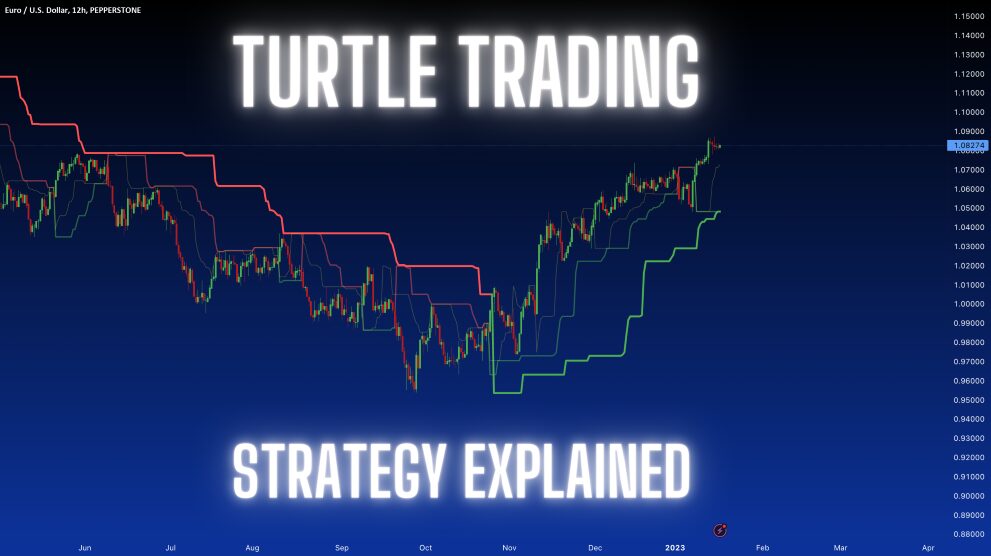
Core Principles of Turtle Trading
Modern traders can extract several lessons from the Turtle trading strategy. The foundation of their strategy relied on several key principles:
- Trend following: Turtles focused on identifying and riding market trends rather than predicting reversals.
- Risk management: Each trade risked only a small percentage of the account to protect capital during drawdowns.
- Position sizing: Trade sizes were scaled according to market volatility, ensuring consistent exposure relative to risk.
- Mechanical rules: Entry and exit signals were clearly defined, minimizing emotional decision-making.
These principles are just as relevant today as they were in the 1980s, even in the era of algorithmic and high-frequency trading.
Discipline Over Intuition
One of the most important lessons from the Turtle Trading experiment is the importance of discipline. Traders often make decisions based on emotions, such as fear or greed, rather than sticking to a proven strategy. The Turtles were trained to follow rules meticulously, which reduced impulsive decisions and increased consistency.
In modern markets, emotional discipline is critical. Even when automated trading is used, understanding the underlying rules and sticking to them helps traders avoid mistakes.
Modern Applications of Turtle Strategies
Although the markets have evolved, Turtle Trading strategies remain adaptable for contemporary traders. Today, these strategies are applied across various asset classes, including Forex, stocks, and cryptocurrencies.
Some ways modern traders implement Turtle principles include:
- Using moving averages and breakout systems to identify trends.
- Applying volatility-based position sizing to adjust exposure according to market conditions.
- Incorporating stop-loss rules to limit potential losses and preserve capital.
- Maintaining consistency across multiple markets to diversify risk.
By adapting these principles to today’s trading platforms, investors can leverage both historical wisdom and modern technology.
Importance of Risk Management
Risk management was a cornerstone of Turtle Trading. Each trade risked a small percentage of total capital, usually 1–2%, which ensured that even a series of losses would not devastate the account. Modern traders can apply this lesson by calculating risk per trade, using stop-loss orders, and maintaining diversified portfolios.
Ignoring risk management is one of the most common reasons traders fail, regardless of market knowledge or strategy. The Turtles demonstrated that protecting capital is as important as making profits.
The Psychological Advantage
The Turtles also highlighted the psychological advantages of systematic trading. Knowing that every trade followed a pre-defined rule set reduces stress and hesitation, allowing traders to execute trades confidently.
Modern traders can benefit from this approach by:
- Developing trading plans with clear entry and exit rules.
- Practicing journaling to track performance and emotional responses.
- Using automated alerts or signals to avoid overthinking during market fluctuations.
- Accepting drawdowns as part of the strategy, preventing emotional decisions that could lead to overtrading.
This psychological resilience is crucial for long-term success in volatile markets.
Adapting Turtle Rules to Different Markets
The original Turtle Trading experiment was primarily focused on commodities, but the methodology can be adapted for other markets. Trend-following principles apply to equities, Forex, and even cryptocurrencies.
For example, in the cryptocurrency market, which is highly volatile, Turtle-style strategies can help traders:
- Capture sustained price movements across multiple coins.
- Adjust position sizes according to daily or weekly volatility.
- Use automated alerts to monitor breakouts without constantly watching charts.
The adaptability of the Turtle framework makes it relevant even in modern, fast-moving markets.
Lessons Beyond Technical Rules
While the Turtles were taught technical rules for trading, the experiment also emphasizes broader lessons:
- Patience pays off: Not every trade is an opportunity. Waiting for clear setups improves outcomes.
- Consistency matters: Following rules consistently yields better results than sporadic attempts.
- Education is key: Understanding why rules exist is as important as executing them.
- Diversification reduces risk: Applying strategies across multiple instruments spreads exposure and limits potential losses.
These lessons remind traders that success requires more than just identifying patterns—it demands a holistic approach to the craft.
The Legacy of Turtle Trading
The Turtle Trading experiment continues to influence traders worldwide. Many professional trend-following funds and automated trading algorithms are rooted in the principles established by Dennis and Eckhardt. For individual traders, the Turtles’ success reinforces that a disciplined, systematic approach can produce consistent results, even without natural talent or intuition.
The experiment serves as a reminder that trading is not about guessing: it is about following structured processes, managing risk, and maintaining emotional control.
Applying Turtle Wisdom Today
Modern traders have much to gain from revisiting the Turtle Trading methodology. From strict risk management and trend identification to psychological discipline and systematic execution, the lessons remain applicable across all markets. By combining these principles with contemporary tools, such as algorithmic platforms, real-time data, and advanced analytics, traders can enhance their performance and increase the likelihood of long-term success.
The Turtle Trading experiment proves that successful trading is not a talent reserved for a few—it is a skill that can be learned, practiced, and refined. By embracing these timeless lessons, traders can navigate today’s markets with greater confidence and precision.